LOCAL REALITY FIELD NOTES / ASTRONOMY GEAR
Telescope mounts explained: alt-azimuth vs. equatorial
Learn how alt-azimuth, Dobsonian, equatorial and GoTo telescope mounts work, which is easier for beginners, and what to check for visual observing or astrophotography.
PRACTICAL BUYING GUIDE · UPDATED OCTOBER 14, 2026 · NOT A HANDS-ON PRODUCT TEST
Affiliate disclosure: this retailer link may earn Local Reality a commission at no extra cost to you. Illustrations are for orientation, not a claim that a specific product was tested.
This guide focuses on choosing equipment for a real observing goal, not chasing the biggest specification or the most expensive listing. I have not personally tested every product linked here. Verify exact specifications, compatibility, current stock, shipping, return terms and total cost with the manufacturer or seller before ordering.
Why the mount matters so much
The mount holds the optical tube, points it, and helps keep the target in view as Earth rotates. A mount that shakes, slips or is awkward to aim can make focusing and observing frustrating. When comparing telescope kits, evaluate the mount and tube as one system rather than assuming the mount is just a stand.
The main mount styles
| Mount | Motion / setup | Best fit | Limits |
|---|---|---|---|
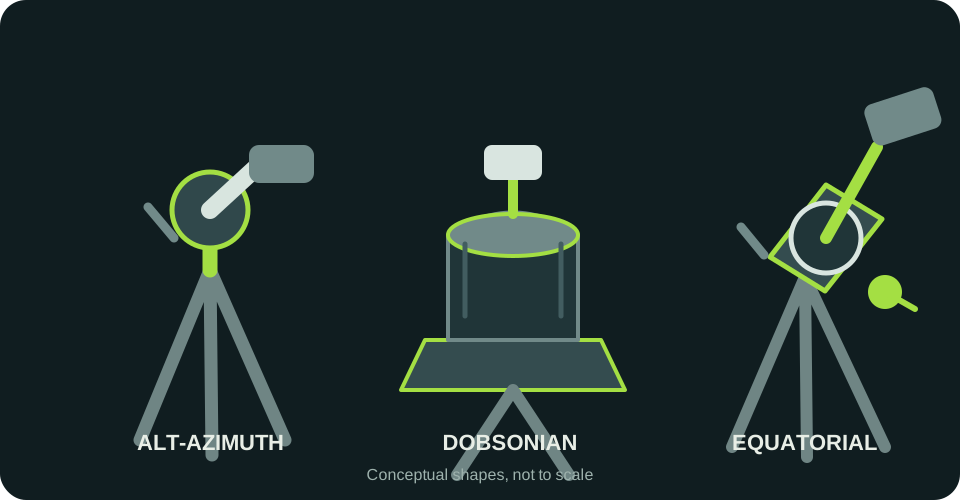
| Alt-azimuth | Moves left-right and up-down; usually intuitive. | Casual visual observing, travel and quick sessions. | For long exposures, the field rotates unless the system adds appropriate compensation. |
| Dobsonian | A common simple alt-azimuth base for a Newtonian reflector; nudged by hand. | Visual observers who want aperture and straightforward mechanics. | Can be large; tracking is manual unless a tracking platform or motorized system is added. |
| Equatorial | One axis is aligned parallel to Earth's rotation axis; tracking that axis can follow the sky. | Visual observing and, with suitable motors and setup, tracking for imaging. | Polar alignment and counterweight balancing add setup steps; a mount can be heavy. |
| GoTo | Computerized system points toward selected targets after setup and alignment. | Observers who want help locating many targets. | Needs power and correct alignment; computerized pointing does not guarantee an easy view or eliminate learning. |
| Camera tripod | Designed primarily for cameras, not every telescope's weight or leverage. | Some small, lightweight spotting scopes or compact instruments if rated appropriately. | Often inadequate for a long, heavy telescope tube; check payload and vibration carefully. |
What does “stable” mean?
At high magnification, a small touch can move the target across the field. Stability depends on more than a manufacturer's payload number: tripod leg thickness, head design, tube length, balance, wind and how the focuser is touched all matter. A long tube can create more leverage than a shorter tube of similar weight.
When possible, test the mount: focus a bright distant target safely during daylight or a bright celestial target at night, tap the tube gently, and see how long vibrations take to settle. Never point an unfiltered telescope at the Sun.
Manual tracking vs. motorized tracking
Earth's rotation makes celestial objects appear to drift across the field. With a manual alt-azimuth or Dobsonian mount, you nudge the telescope to follow. At low magnification this can be easy; at high magnification it takes more frequent corrections. A motor can reduce manual nudging, but compatibility and setup matter.
For long-exposure deep-sky photography, a motorized equatorial mount with sufficient capacity and accurate polar alignment is a common approach. The mount must carry the actual imaging payload—including telescope, camera, guide equipment and accessories—with adequate stability. A mount suitable for visual observing may not be suitable for long exposures at the same load.
Do you need GoTo?
GoTo can save time finding faint or unfamiliar targets, especially under light-polluted skies, but it is not mandatory. A manual mount teaches you to aim and can be quieter, lighter and less expensive. A GoTo system needs its prescribed alignment procedure, correct location/time settings, power and an unobstructed view of alignment stars as required by that model.
Questions to ask before buying
- Will it carry my complete optical tube without persistent vibration?
- Can I reach the eyepiece comfortably when the telescope points high?
- Can I transport and store it without help?
- Does it require counterweights, batteries, a power supply or a polar scope?
- Is tracking included or an optional accessory?
- Are the mounting interface and attachment hardware compatible with my tube?
- Is the seller's capacity guidance intended for visual use or imaging?
Common mistake: buying a great tube with an inadequate mount
Aperture is appealing on a spec sheet, but a wobbly setup makes the detail difficult to see. For visual use, a sturdy Dobsonian base can be a sensible option. For a compact travel setup, a smaller tube on a solid alt-azimuth mount may be used more often. For imaging, research the mount first and budget for the entire tracking system.
Further reading and compatible parts
Read the beginner telescope buying guide before choosing an optical tube. If you already own a telescope, the eyepiece guide can help you decide whether magnification or field of view is the issue.
- Browse telescope accessories ↗ — verify that any adapter, motor or mount part matches your exact model.
Affiliate disclosure: Some retailer links on this site use a referral code. Local Reality may earn a commission from qualifying purchases at no additional cost to you. Affiliate relationships do not guarantee that an item is suitable; check the specifications and your own needs.
Start with binoculars vs. telescope ↗ · Binoculars buying guide ↗ · Telescope eyepieces explained ↗ · Plan a night with the gear you have ↗